.avif)

How AI-Driven Web Design Is Changing Brand Growth in 2026
Key Takeaways:
- In 2026, AI-driven web design has transformed websites from static pages into adaptive systems that personalize experiences in real time
- Brand growth is now driven by relevance, clarity, and intelligent UX rather than visuals alone
- AI enables scalable personalization, predictive user journeys, and continuous optimization across content and design
- Generative Engine Optimization (GEO) is reshaping discoverability as AI-powered platforms influence how brands are found and trusted
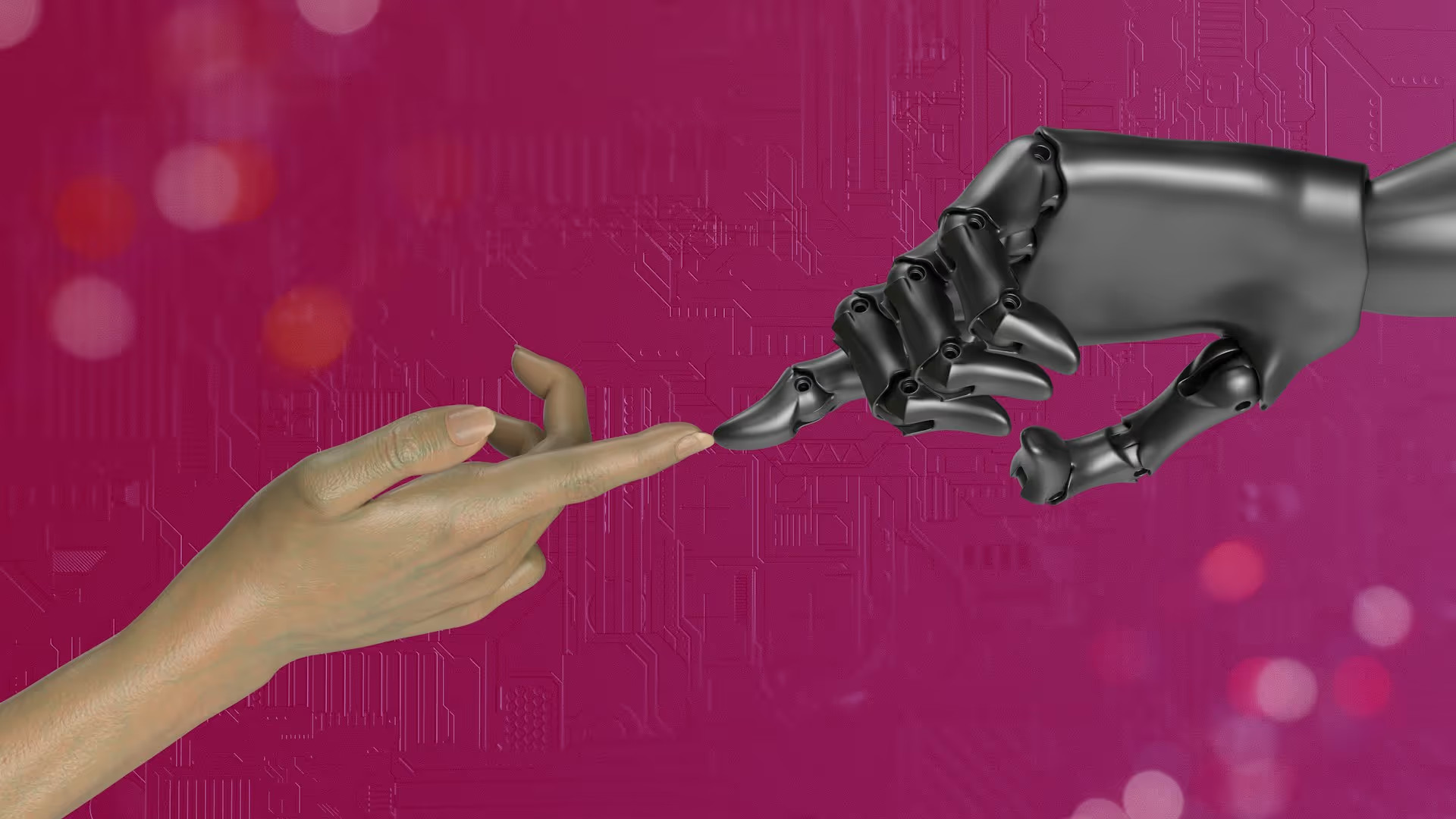
- The most successful brands combine human creativity with AI insight to build flexible, high-performing digital experiences
Introduction:
By 2026, web design has moved far beyond aesthetics and layout. The era of static pages, generic user journeys, and one-size-fits-all experiences is effectively over. Today, the most successful brands are using artificial intelligence not just to automate tasks, but to fundamentally reshape how people experience, understand, and trust their digital presence.
AI-driven web design has become a strategic growth lever. It influences how brands are discovered, how users engage, and how trust is built over time. Websites are no longer passive destinations. They are living systems that learn, adapt, and respond in real time.
This shift is not about replacing designers or creativity. It is about amplifying human insight with machine intelligence to create digital experiences that feel more intuitive, personal, and effective. Brands that embrace this shift are seeing measurable gains in engagement, conversion, retention, and long-term brand equity. Those that do not are increasingly struggling to stay relevant in crowded digital markets.
In this article, we explore how AI-driven web design is changing brand growth in 2026, what technologies are driving the shift, and how forward-thinking organizations are using AI to build stronger, more resilient digital brands.
The Evolution of Web Design: From Visual Craft to Intelligent Systems:
For most of the web’s history, design focused on structure and presentation. Early websites were informational. Later, they became more interactive, responsive, and visually refined. By the 2010s, UX and conversion optimization became central concerns.
AI marks the next evolution.
Instead of designing fixed pathways, teams now design systems that adapt. Instead of guessing user intent, they infer it. Instead of manually optimizing content, they continuously improve it based on behavior, context, and outcomes.
In 2026, AI-driven web design blends multiple disciplines:
- UX and behavioral psychology
- Data science and machine learning
- Brand strategy and storytelling
- SEO, GEO, and AI search optimization
- Front-end engineering and performance optimization
The result is a website that feels less like a brochure and more like a conversation.
What “AI-Driven Web Design” Actually Means in 2026
AI-driven web design is not a single tool or feature. It is an ecosystem of capabilities working together.
At its core, it includes:
1. Adaptive User Experiences
Websites dynamically adjust layout, messaging, navigation, and content based on user behavior, location, device, referral source, and intent signals.
A first-time visitor sees a different experience than a returning user. A CEO sees different messaging than a developer. A high-intent visitor is guided differently than someone exploring casually.
2. Intelligent Content Systems
AI helps generate, personalize, and optimize content at scale. This includes headlines, summaries, CTAs, FAQs, and even visual elements.
Human teams define strategy and voice. AI helps test, adapt, and refine delivery in real time.
3. Predictive UX and Decision Support
Instead of reacting to user actions, AI predicts what users are likely to need next and surfaces the right information proactively.
This reduces friction, shortens decision cycles, and increases confidence.
4. AI-Optimized Discovery
Websites are now designed not just for Google, but for AI-powered discovery platforms. Content is structured so it can be understood, summarized, and cited by large language models.
This is where Generative Engine Optimization (GEO) becomes critical.
Why AI-Driven Web Design Is a Growth Multiplier for Brands
The impact of AI on brand growth is not incremental. It is compounding.
Improved Engagement Through Relevance
People engage when content feels relevant. AI enables relevance at scale by tailoring experiences without requiring thousands of manual variants.
When users feel understood, they stay longer, explore deeper, and build trust faster.
Higher Conversion Without Aggressive Tactics
AI-driven UX focuses on clarity and guidance, not pressure. Users convert because the experience reduces uncertainty, not because of intrusive tactics.
This leads to higher-quality leads and customers who are more aligned with the brand.
Stronger Brand Perception
Consistency, clarity, and responsiveness all reinforce brand credibility. AI helps maintain these qualities across complex websites and growing content libraries.
Brands feel more polished, more confident, and more modern.
Faster Learning Cycles
Traditional optimization relies on slow A/B tests. AI accelerates learning by identifying patterns across many variables simultaneously.
This allows brands to adapt faster to market changes and user expectations.
The Role of AI in Modern UX and UI Design
From Static Personas to Living User Models
In 2026, personas are no longer static documents. AI systems continuously update user models based on real behavior.
Design decisions are informed by live insights, not assumptions.
Smarter Navigation and Information Architecture
AI analyzes how users move through content and identifies friction points. Navigation structures evolve over time to reflect real usage patterns.
This is especially powerful for content-heavy sites like education, healthcare, B2B SaaS, and professional services.
Visual Design That Supports Cognition
AI assists in optimizing layout, spacing, contrast, and hierarchy based on how users process information. Design choices are validated by data, not just taste.
The result is interfaces that feel effortless to use.
AI-Driven Content Strategy and Storytelling
Content remains the backbone of brand communication. AI changes how it is created, structured, and delivered.
Content as a System, Not Pages
AI encourages modular content design. Instead of rigid pages, content is broken into components that can be recombined dynamically.
This supports personalization, reuse, and consistency across channels.
Voice and Tone at Scale
Brands define voice and values. AI ensures those guidelines are followed consistently, even as content volume grows.
This reduces drift and maintains brand integrity.
Continuous Optimization Without Burnout
AI handles repetitive optimization tasks, freeing human teams to focus on strategy, creativity, and insight.
Generative Engine Optimization (GEO) and the New Discovery Landscape
Search behavior in 2026 is no longer limited to search engines. People ask questions directly to AI systems and expect synthesized answers.
Designing for AI Understanding
Websites must be structured so AI systems can understand:
- What the brand does
- Who it serves
- How offerings differ
- Why the brand is credible
This requires clear semantics, structured data, and well-organized content.
Authority Over Keywords
AI-driven discovery prioritizes authority and clarity over keyword density. Brands that explain complex topics well are surfaced more often.
This rewards expertise, not tricks.
Long-Term Visibility
Content designed for AI discovery tends to have a longer shelf life. Instead of chasing trends, brands build durable visibility.
Real-World Impact: How Brands Are Growing Faster with AI-Driven Design
Across industries, brands are seeing tangible results:
- B2B companies shortening sales cycles through clearer, personalized journeys
- Healthcare and education organizations improving trust and accessibility
- Startups competing with larger players through smarter digital experiences
- Enterprise brands simplifying complex offerings without losing depth
The common thread is intentional design combined with intelligent systems.
Challenges and Misconceptions Around AI-Driven Web Design
AI Is Not a Shortcut
Poor strategy amplified by AI is still poor strategy. AI requires clear goals, strong foundations, and human oversight.
Ethics and Transparency Matter
Brands must be transparent about data use and avoid manipulative personalization. Trust is fragile and easily lost.
Human Judgment Remains Essential
AI supports decisions but does not replace judgment. The best results come from collaboration between humans and machines.
Best Practices for Brands Adopting AI-Driven Web Design
- Start with strategy, not tools
- Invest in content structure and clarity
- Design systems, not pages
- Measure outcomes, not vanity metrics
- Keep humans in the loop
AI works best when it serves a clear vision.
What’s Next: The Future Beyond 2026
Looking ahead, AI-driven web design will continue to evolve:
- Deeper integration with business intelligence
- More conversational and multimodal interfaces
- Greater emphasis on trust, ethics, and explainability
- Websites that act as strategic advisors, not just destinations
Brands that adapt now will be better positioned for what comes next.
Conclusion: Growth Belongs to Adaptive Brands
In 2026, brand growth is no longer driven by louder messaging or bigger budgets alone. It is driven by relevance, clarity, and intelligence.
AI-driven web design allows brands to meet users where they are, understand what they need, and guide them forward with confidence. It transforms websites from static assets into dynamic growth engines.
The brands that win are not those that use AI everywhere, but those that use it thoughtfully. They combine human creativity with machine intelligence to build digital experiences that feel alive, trustworthy, and genuinely helpful.
That is the future of brand growth.