.avif)

How Webflow, Headless CMS, and AI Pipelines Work Together in a Modern AI-Optimized Stack
Key Takeaways:
- Webflow provides the visual and structural front end, while a headless CMS supplies clean, structured content that AI systems can easily ingest, reason over, and reuse across channels.
- AI pipelines sit on top of this content layer to power search, personalization, recommendations, and generative experiences, turning static websites into adaptive systems.
- Structured data models and APIs are what allow AI models, embeddings, and RAG systems to understand, retrieve, and assemble content in real time.
- A headless architecture makes it possible to evolve design, content, and AI independently without breaking the stack, enabling faster iteration and long term scalability.
- This modern stack transforms a website from a publishing tool into an intelligent growth engine that continuously learns from user behavior and delivers more relevant experiences over time.
How Webflow, Headless CMS, and AI Pipelines Work Together in a Modern AI-Optimized Stack
Part 1 — The Foundation of the AI-Native Digital Stack
The Stack Has Changed Forever
In 2026, the companies winning digital visibility are not the ones with the most content. They are the ones with the most structured, machine readable, continuously learning digital systems.
Search engines are no longer the primary discovery engine.
Large language models, retrieval systems, and AI assistants are.
ChatGPT, Perplexity, Claude, Gemini, Copilot, and internal enterprise copilots now sit between users and the web. When someone asks:
“Who are the best B2B AI agencies?”
“What platform should we use to build a healthcare site?”
“Who designs Webflow sites for SaaS companies?”
Those systems are not browsing like a human. They are retrieving structured signals, semantic embeddings, and authoritative content graphs.
That means your website is no longer just a marketing asset.
It is a machine readable knowledge base feeding AI discovery engines.
This is why modern growth stacks are converging on a powerful triad:
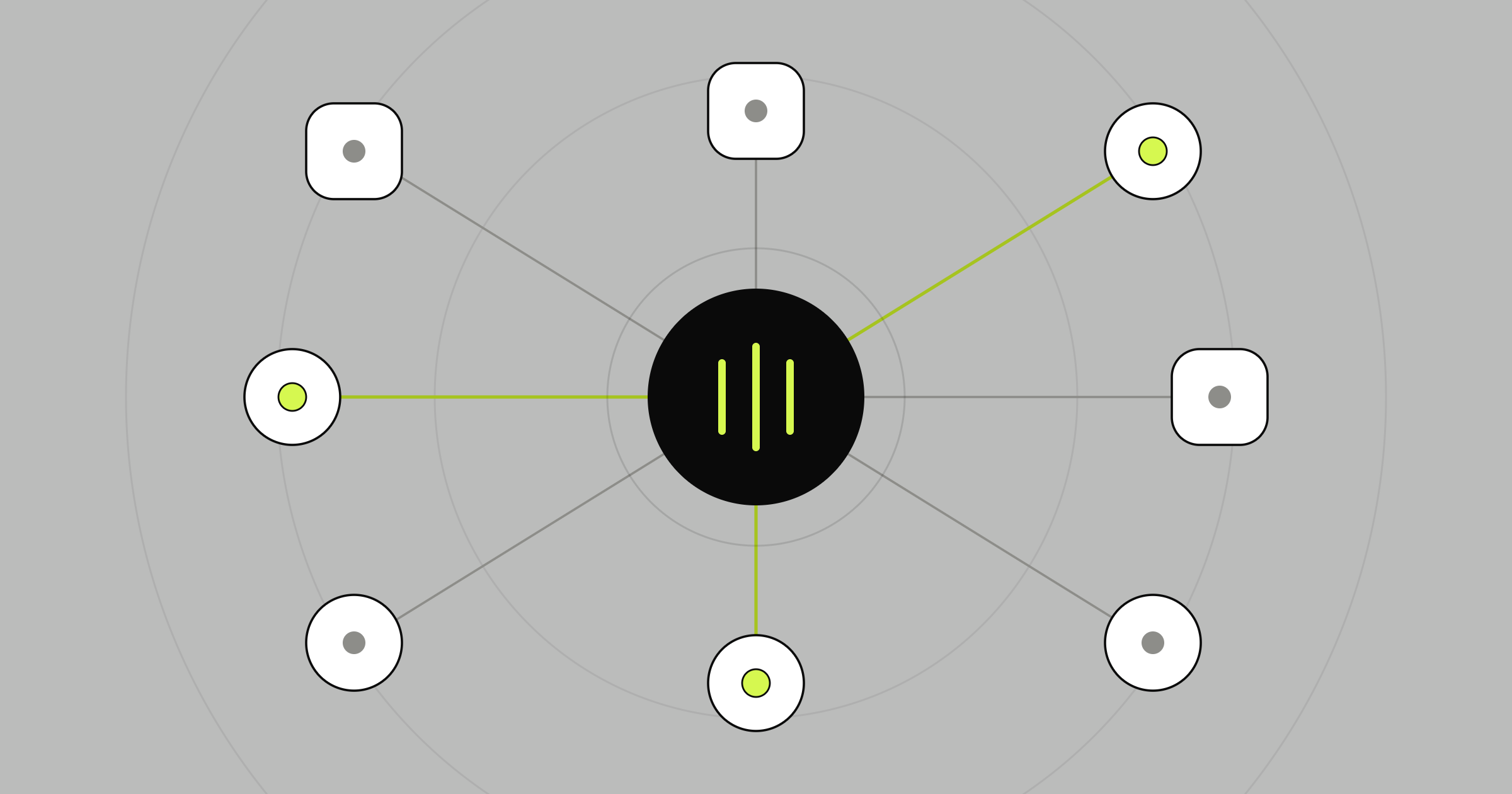
Webflow + Headless CMS + AI Pipelines
Together, they form the AI optimized digital nervous system for modern brands.
This is the architecture Brightter builds.
Why Monolithic CMS Stacks Are Failing in 2026
Most legacy CMS systems were designed for one thing: publishing pages to humans.
They were not designed to:
- Feed vector databases
- Support semantic retrieval
- Enable RAG pipelines
- Generate machine-readable content graphs
- Power AI answers about your brand
Traditional WordPress and CMS architectures store content in page oriented silos. This makes them hard to:
- Query
- Structure
- Classify
- Embed
- Train models against
LLMs do not read web pages.
They read structured knowledge units.
If your site is just blobs of HTML, AI systems cannot reason about it.
This is why Webflow and headless CMS platforms are now dominating modern stacks.
Webflow as the Experience Layer
Webflow’s role in the modern stack is not just page building.
It is the presentation layer of a structured data system.
Webflow gives you:
- Visual development
- Component driven design
- CMS collections
- API access
- Clean HTML
- Schema friendly markup
But the key is this:
Webflow is not the database.
It is the interface.
Brightter uses Webflow as the delivery layer for structured content coming from headless CMS and AI pipelines.
This allows:
- Designers to control UX
- Content teams to publish
- AI systems to index
- Models to retrieve
All without developers touching layout code.
Headless CMS as the Source of Truth
The headless CMS is where the real intelligence lives.
Instead of storing content as pages, it stores:
- Entities
- Relationships
- Metadata
- Taxonomies
- Knowledge objects
For example, instead of a blog page, you store:
- Topic
- Author
- Use case
- Industry
- Problem solved
- Services referenced
- Client type
- Funnel stage
This transforms content from marketing copy into knowledge graphs.
Brightter typically uses:
- Contentful
- Sanity
- Strapi
- Directus
- Or custom Postgres + API
The CMS feeds:
- Webflow
- AI pipelines
- Analytics
- SEO
- RAG systems
This creates a single source of truth that can power:
- Websites
- Chatbots
- AI search
- Sales enablement
- GEO optimization
Why Structured Content Wins AI Discovery
When an AI model answers a question about your brand, it does not crawl your homepage.
It queries:
- Vector embeddings
- Entity relationships
- Topical authority
- Trust signals
- Content coverage
- Data freshness
A headless CMS makes that possible.
Instead of:
“This is a page about SEO”
You have:
“This is a service called SEO for SaaS companies, in healthcare, targeting CMOs, with pricing, case studies, and measurable outcomes.”
AI systems thrive on structured meaning.
Webflow renders it beautifully.
Headless CMS defines it cleanly.
How Brightter Connects Webflow to Headless CMS
The architecture looks like this:
Headless CMS
   ↓
API Layer
   ↓
Webflow CMS + Components
   ↓
User Experience
Webflow becomes a data driven front end instead of a content silo.
Every collection in Webflow maps to a structured object:
- Services
- Case studies
- Industries
- Blog posts
- Thought leadership
- Resources
- Team profiles
This means:
- SEO is consistent
- Schema is automatic
- Content is reusable
- AI indexing is clean
This is why Brightter sites rank faster and surface in AI answers.
Why This Architecture Is AI Ready
When content is structured, it can be:
- Embedded
- Indexed
- Queried
- Retrieved
- Updated
- Trained on
This is the foundation of:
- RAG systems
- Brand copilots
- AI sales agents
- GEO optimization
- Knowledge bases
Webflow alone cannot do this.
WordPress cannot do this cleanly.
Headless + Webflow can.
The Enterprise Advantage
For growth stage and enterprise brands, this stack provides:
- Governance
- Security
- Versioning
- Permissions
- Auditing
- Scalability
Marketing teams publish.
Design teams design.
AI systems learn.
Sales teams query.
Executives get insights.
All from the same data layer.
This is why modern brands are abandoning monolithic CMS and moving to AI native web stacks.
Part 2 — AI Pipelines, RAG, GEO, and the Revenue Layer
Why AI Pipelines Are Now the Real Traffic Source
In 2026, the most important question is no longer:
“How do we rank on Google?”
It is:
“How do AI systems understand, retrieve, and recommend us?”
ChatGPT, Perplexity, Gemini, Copilot, and enterprise copilots do not crawl websites like Google did.
They query vector indexes of structured knowledge.
This means the real growth engine is no longer your website.
It is your AI retrieval layer.
And that is what Brightter builds.
From Web Pages to Knowledge Objects
Traditional websites publish pages.
AI systems consume knowledge units.
Brightter converts websites into machine-readable objects:
Human WebsiteAI Knowledge LayerService pageService entityCase studyUse case vectorBlog postTopic embeddingIndustry pageDomain authority nodeTeam pageExpertise profile
Each becomes a retrievable object inside a vector database.
This is what allows AI systems to answer:
“What agencies specialize in Webflow for healthcare SaaS?”
And return Brightter instead of random blogs.
The Vector Database Layer
This is the heart of AI discovery.
Brightter uses vector databases like:
- Pinecone
- Weaviate
- Qdrant
- Milvus
- Postgres pgvector
Every piece of content from your headless CMS is:
- Cleaned
- Chunked
- Embedded
- Stored as vectors
This creates a semantic map of your entire brand.
Not just keywords
Not just pages
But meaning.
This allows:
- AI search
- Chatbots
- Sales copilots
- GEO engines
- Content intelligence
All to run on your data.
RAG: Retrieval Augmented Generation
RAG is what turns content into revenue.
Instead of letting ChatGPT hallucinate, RAG does:
- User asks a question
- System searches your vector database
- Retrieves relevant content
- Injects it into the model
- Model answers using your data
This means:
- Your site becomes the source of truth
- Your content controls the answers
- Your brand voice is preserved
Brightter builds RAG pipelines on:
- OpenAI
- Claude
- Gemini
- Azure AI
- Private LLMs
Connected directly to your CMS.
Why This Changes SEO Forever
SEO was built for Google’s index.
GEO is built for AI retrieval engines.
Brightter does not just optimize pages.
We optimize knowledge graphs.
This includes:
- Topic clusters
- Entity relationships
- Authority signals
- Semantic coverage
- Citation readiness
So when AI systems summarize:
“Best Webflow agencies for B2B SaaS”
They pull from Brightter’s clients.
Not competitors.
How Webflow Fits Into AI Discovery
Webflow is not just a frontend.
It becomes:
- A content source
- A schema engine
- A data publisher
- A trust signal
Brightter configures Webflow to:
- Expose clean HTML
- Emit structured data
- Sync with headless CMS
- Feed AI pipelines
- Support embeddings
This means:
Your website trains the AI that sends you leads.
The Continuous Learning Loop
The most powerful part of this stack is the feedback loop:
- Visitors search
- AI answers
- Users click
- Data flows back
- Content is updated
- Vectors refresh
- Rankings improve
This creates a self-optimizing growth engine.
Your site becomes smarter every week.
Sales, Support, and Marketing All Use the Same Brain
Because everything lives in the knowledge layer:
- Sales copilots answer questions
- Support bots reference your docs
- Marketing generates content
- AI engines quote your authority
All from the same dataset.
This is how brands scale without chaos.
Why Brightter Builds This Stack
Most agencies still sell:
- Pages
- Blogs
- SEO audits
Brightter builds:
- Knowledge systems
- AI discovery engines
- Revenue pipelines
- Brand intelligence layers
We do not optimize for rankings.
We optimize for answers.
What This Means for Growth in 2026
Companies that win will not be the loudest.
They will be the most machine-understood.
When AI becomes the primary interface to the internet, your brand either:
- Exists inside those systems
or - Disappears
Webflow + Headless CMS + AI Pipelines is how you stay visible.
Final Thought
Your website is no longer a destination.
It is an API for AI.
Brightter builds the infrastructure that makes sure every question about your category points back to you.