.avif)
Is Your Website Built for Scale or Just Style? How Los Angeles Businesses Can Tell
Key Takeaways:
- This guide helps Los Angeles businesses understand whether their website is built for style, scale, or both.
- Breaks down why many LA websites look great but fail to support marketing, SEO, and growth.
- Explains how scalable CMS architecture, reusable components, and strong infrastructure drive performance.
- Highlights common bottlenecks such as slow publishing, fragile layouts, and broken funnels.
- Compares WordPress, Webflow, and Headless setups for brands needing scalable systems.
- Shows how LA businesses can future-proof their digital presence with systems-focused development.
- Shares Brightter’s process for building high-performance, scalable sites tailored for growth.
1. Introduction:
In Los Angeles, style is a given—but scale is a choice. Your website might look incredible, but if it’s not engineered to grow with your business, that beauty becomes brittle.
You’re spending on ads, driving traffic from social, and creating buzz. But your conversions are flat. Your team avoids touching the CMS. And every new campaign or content piece feels like a production, not a process.
This guide was written for LA founders, marketing directors, brand leads, and digital operators who are ready to turn their website from a static asset into a dynamic growth engine. Because in 2025, websites can’t just be beautiful—they have to be built for momentum. Working with the right web design agency Los Angeles companies rely on can make this shift far smoother.
2. The True Cost of a Stylish but Unscalable Website
Let’s get clear: beautiful websites aren’t bad. A clean, modern aesthetic matters. But when a site prioritizes style over substance, the damage isn’t cosmetic—it’s strategic.
Here’s what we see in the field:
- Bottlenecks in publishing: internal teams depend on freelancers to make small copy or image updates
- Missed SEO opportunities: great products can’t be found because the structure wasn’t built to rank
- Broken marketing funnels: you run a killer campaign, but there’s no scalable place to send the traffic
- Inefficient development: every new page requires custom code instead of assembling from flexible, reusable blocks
- Disconnected analytics: you can’t tell which pages are converting—or why traffic is bouncing
In LA, where product cycles are short and competition is fierce, this isn’t sustainable. It holds your business back every day. Many brands end up hiring web design firms Los Angeles companies trust to rebuild their infrastructure properly.
3. Is Your Website Scalable? Ask These Questions:
a. How fast can your team ship a new campaign page?
If the answer is "after we get design approvals and dev availability," you're already lagging behind. Scalable systems let marketers launch in hours, not weeks.
b. Can your content team publish without fear of breaking layout?
A good CMS makes content entry safe, simple, and visually consistent—especially for non-tech users.
c. Are you creating pages that support different stages of your funnel?
Scalable websites aren’t flat—they have:
- TOFU (Top of Funnel) blog content
- MOFU (Middle of Funnel) explainer and service pages
- BOFU (Bottom of Funnel) case studies and demo flows
d. Does your CMS map to how your business works?
For instance:
- Custom post types for events, locations, or products
- Taxonomies that match how your users search
- Relationships between content types (like team members + services)
e. Are your site assets modular and reusable?
Can you use the same testimonial block on a landing page, blog post, or feature page? If not, your system isn’t built for speed—or scale.
f. How does your website handle traffic spikes?
If a spike in traffic from PR or paid ads slows or crashes your site, your hosting and performance stack need an overhaul.
4. Infrastructure Choices That Impact Scalability
Not all platforms are created equal. Here’s how the most popular website platforms stack up for scale:
WordPress (Brightter’s recommendation for most LA businesses):
- ✅ Flexible content architecture
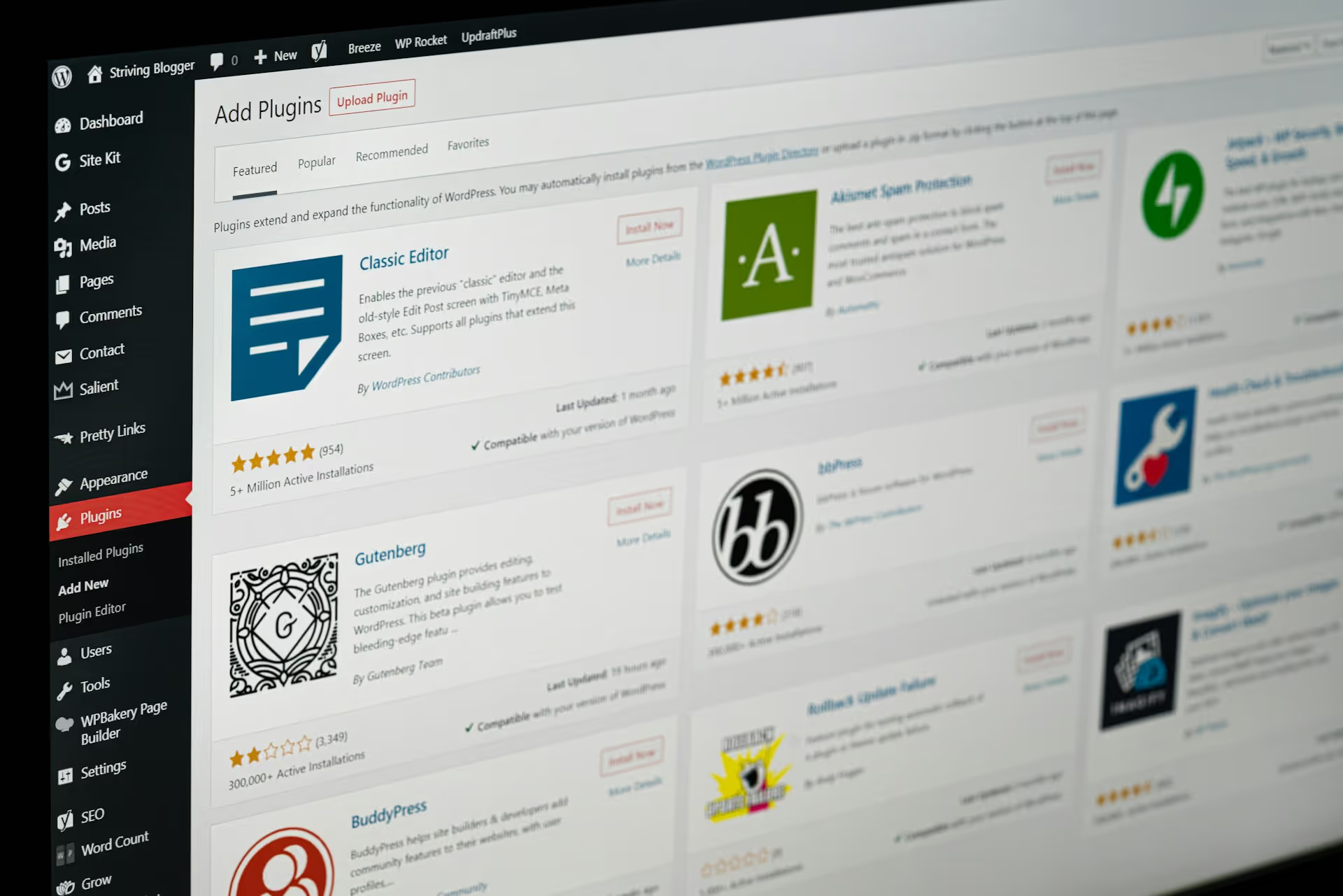
- ✅ Thousands of plugins
- ✅ Mature SEO tooling
- ✅ Massive ecosystem of developers
- ⚠ Needs thoughtful theme + plugin management to avoid bloat
Brightter’s web design services in Los Angeles often start with WordPress because it balances ease, scalability, and long-term ownership.
Webflow:
- ✅ Excellent design control and CMS for visual teams
- ✅ Great for startup marketing sites
- ⚠ CMS has field limits and limited extensibility for enterprise scale
Headless CMS (e.g., Sanity, Contentful) + Jamstack Frontend:
- ✅ Best for complex, dev-heavy environments
- ✅ Blazing fast and API-first
- ⚠ Requires dev resources and hosting orchestration
Brightter works with all three, but we often start LA clients with WordPress—built right—with modular design systems and optimized performance layers.
5. The LA Challenge: Why This City Requires More Than Just Design
In Los Angeles, everything moves fast. Brands rise and fall on their ability to execute—not just envision. If your site can’t keep up with your pace, it becomes a liability.
LA-Specific Website Needs:
- High-converting mobile experience: 80%+ traffic from mobile means your thumb UX better be flawless
- Multilingual readiness: LA’s audience is diverse; your tech stack should be localization-ready
- Content-heavy workflows: From media to wellness to real estate, your brand needs to publish fast and frequently
- SEO in competitive niches: Google search in LA is a battleground for lawyers, medspas, dentists, agents, and more
- Performance under pressure: If you get a shoutout from an influencer, will your site hold up?
The LA market punishes fragile infrastructure. Your website needs to play offense—not just look pretty on the bench. A strong web design Los Angeles partner helps ensure your system is built for this pace.
6. Brightter’s Process: How We Build Websites That Scale
Our LA clients don’t just want a website—they want a system they can run growth on. Here’s how we get there:
Step 1: Strategy & Audit
- Map existing CMS structure, page speed, SEO, and UX
- Interview your team to understand workflows and bottlenecks
- Analyze competitors and top-ranking LA brands in your niche
Step 2: CMS & Component Architecture
- Plan a future-ready content model (WordPress CPTs, fields, taxonomies)
- Build or refactor reusable components (hero blocks, product rows, testimonials)
- Design with system consistency—not one-off flair
Step 3: Performance & SEO Optimization
- Lazy load assets, optimize fonts, compress images
- Structure pages for Core Web Vitals and mobile performance
- Install proper SEO plugins and configure schema, sitemaps, redirects
Step 4: Team Enablement
- Train marketing teams to use the CMS with confidence
- Deliver a design system + content playbook
- Document best practices so you don’t depend on us forever
Brightter isn’t just a web dev agency. We’re a strategic partner in growth-ready digital infrastructure.
7. Conclusion: The Style vs. Scale Dilemma Is Real. And It’s Fixable.
Too many LA businesses fall into the trap of hiring for visuals and getting stuck with a fragile front.
You don’t need to sacrifice aesthetics to gain scalability—you need a team that understands both.
Your brand deserves:
- A site that scales with your products, team, and campaigns
- A CMS that empowers—not delays
- Infrastructure that loads fast, ranks high, and grows with you
Frequently Asked Questions
1. How do I know if my website needs a rebuild or just optimization?
If your team struggles to publish content, pages require custom code, or campaigns take too long to launch, you likely need structural improvements—not just design refreshes.
2. Why do LA businesses need more scalable websites than other cities?
Los Angeles industries move fast—media, wellness, legal, real estate, hospitality. High-volume content, mobile-first users, and competitive SEO demands require flexible, scalable architecture.
3. Does Brightter help migrate from Webflow or other platforms to WordPress?
Yes. Brightter frequently migrates LA businesses from Webflow or custom-coded sites into scalable WordPress systems with modular components.
4. Can Brightter manage performance optimization for large or high-traffic websites?
Absolutely. We help optimize Core Web Vitals, speed, hosting, caching, and infrastructure to handle major traffic spikes without failures.
5. How long does a scalable website project usually take with Brightter?
Most scalable site builds take 6–12 weeks, depending on size, custom architecture, integrations, and content volume.