.avif)

Nearshore + AI: Building a Hybrid LATAM Engineering and AI-Agent Team in 2026
Key Takeaways
- For a decade, scaling engineering meant a bad trade: expensive local talent or cheap offshore talent with a painful time-zone gap. Two shifts have dissolved that trade-off.
- Nearshore Latin America gives you strong engineers in your own working hours; AI agents give you tireless execution of routine work. The advantage belongs to companies combining them, not choosing one.
- The hybrid model isn't “cheaper labor doing the same thing.” It's a different division of labor — senior humans on judgment, agents on the routine — that produces senior output at a fraction of the cost.
- The key skill is work allocation: sorting every task by how clearly it's defined and how much a mistake costs, then routing it to a human, an agent, or an agent-with-review.
- Two nearshore engineers plus agents can match the throughput of four local senior devs at well under half the people cost — because the routine work is automated, not hand-built.
- The hard part was never the technology. It's the orchestration — the handoffs between people and agents — and that's exactly where most hybrid teams succeed or fail.
The trade-off that just dissolved
Every company that has tried to scale an engineering team knows the old dilemma intimately. Hire locally and you get strong, well-aligned engineers — at a fully loaded cost that makes every hire a serious commitment. Hire offshore to save money and you inherit a different problem: a team twelve hours ahead, where every question waits a day for an answer and “let's hop on a call” means someone's working at midnight. Neither option was wrong, exactly. Both just came with a tax you paid forever.
In 2026, two independent shifts have quietly rewritten that math, and most companies haven't updated their mental model. The first is that nearshore Latin America has matured into a deep pool of strong engineers who work in time zones that overlap with the United States. The second is that AI agents have become genuinely capable of handling a real share of engineering work. Each is useful on its own. Together, they don't just soften the old trade-off — they dissolve it. This guide is about the model that emerges when you combine them deliberately, and how to build it without getting the hard part wrong.
Two forces, and why combining them wins
To see the opportunity clearly you have to understand both shifts on their own before you put them together.
Nearshore has matured. Latin America now produces a large, growing population of skilled engineers across modern stacks, many with direct experience working alongside US companies. The decisive feature isn't the talent depth alone — it's the time zone. A team in your working hours collaborates in real time: same-day feedback, standups that actually happen at humane hours, a “quick question” answered in minutes rather than tomorrow. That overlap is what makes nearshore feel like an extension of your team instead of a handoff to a black box.
AI agents have become genuinely useful. The current generation can write boilerplate, generate tests, draft documentation, review code, and complete well-specified tasks with real competence. They don't tire, they work continuously, and they scale the instant you need them to. They are not senior engineers and shouldn't be mistaken for them — but as a tireless junior force multiplier for routine work, they're transformative.
Here's why combining them beats either alone. Nearshore gives you affordable human judgment in your time zone. Agents give you near-free execution of everything that doesn't require judgment. Put them together and you can build a team where expensive human hours are spent only on work that genuinely needs them, while the routine load is absorbed by automation that runs around the clock. That's not the same job done cheaper — it's a fundamentally better structure.
‹ DIAGRAM A — upload “diagram-5a-work-allocation.png” here (caption: The core skill of a hybrid team — routing every task by how clearly it's defined and how much a mistake costs.) ›
The Work-Allocation Model: who does what
A hybrid team lives or dies on one skill: correctly deciding what goes to a human, what goes to an agent, and what goes to an agent with a human reviewing. Get this sorting right and the team hums; get it wrong and you either waste senior engineers on trivial work or let agents loose on things that need judgment. The sorting is driven by two questions about each task — how clearly is it defined, and how much does a mistake cost — which map onto four quadrants.
Agent-owned: clear and low-stakes
Well-specified work where a mistake is cheap and easy to catch — writing tests, generating boilerplate, scaffolding components, drafting documentation, handling routine tickets. This is the natural home of agents. Let them do the first pass at volume; a light human check is enough. This quadrant is where most of the speed and cost advantage comes from, because it's a large share of real engineering work that no longer needs a person doing it by hand.
Agent + review: clear but high-stakes
Work that's well-defined but where a mistake is expensive — code that touches production, changes with real blast radius. Here the agent drafts and a senior engineer signs off. You keep the speed of automation for the first 80% and the safety of human judgment on the decision to ship. The discipline is making the review real, not a rubber stamp.
Senior human: fuzzy and high-stakes
The judgment work — system architecture, hard trade-offs, ambiguous problems where the cost of being wrong is high. This stays firmly with your best people, and it's precisely the work you freed them up to focus on by handing the routine to agents. The whole point of the model is to concentrate senior humans here.
Clarify first: fuzzy but low-stakes
Under-specified work that isn't dangerous but isn't ready for an agent either. A person scopes it — turns the fuzzy request into a clear specification — and only then hands it off. The lesson of this quadrant is that a lot of “agents can't do this” is really “this task wasn't defined well enough for anyone,” and the fix is definition, not more headcount.
The arithmetic of a hybrid team
The model is abstract until you put numbers on it, so let's price the output of a four-person engineering team three ways.
The all-local approach: four mid-to-senior engineers hired domestically. Call their combined fully loaded cost the baseline — index it to 100. Strong, aligned output, but a large fraction of their expensive hours goes to routine work that doesn't need their seniority.
The all-offshore approach: four engineers in a distant time zone. The people cost drops to roughly 55, but the twelve-hour gap taxes throughput — coordination friction, slower feedback loops — so effective output lands around 82 of the baseline. Cheaper, but you feel the drag.
The hybrid approach: two strong nearshore engineers in your time zone, each amplified by AI agents that absorb the routine load — tests, boilerplate, docs, first-draft code. The two humans spend their time almost entirely on architecture, hard problems, and reviewing what the agents produce. People cost falls to about 42, and because the routine work is automated rather than hand-built, throughput actually edges past the all-local baseline, around 104.
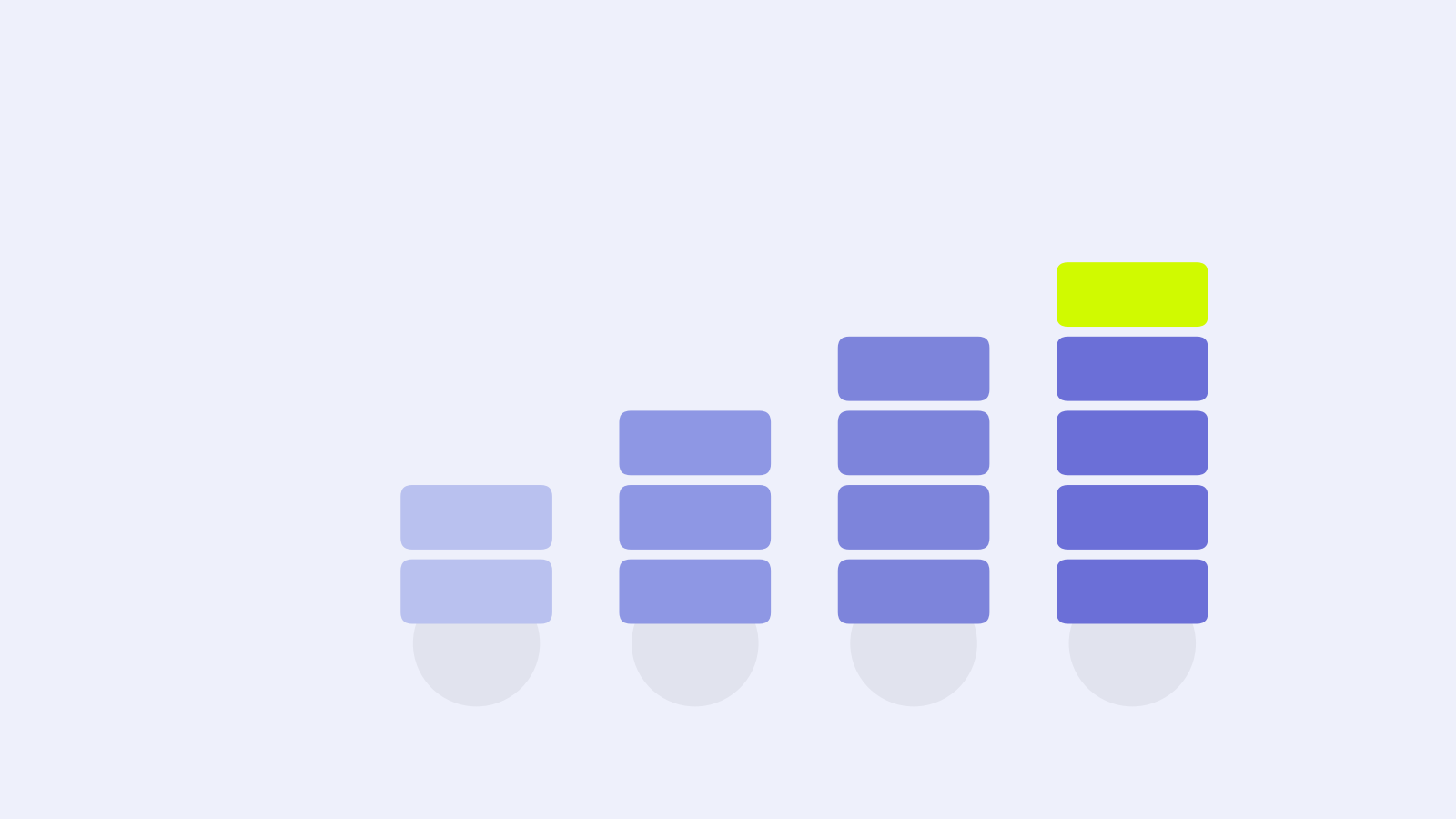
Read those three rows together and the point is unmistakable: the hybrid team matches or beats four local engineers on output at well under half the people cost. And critically, the savings don't come from paying people less to do the same work — they come from restructuring the work so human hours are spent only where they create value. The exact ratios shift with your stack and workload, but the direction is consistent and large.
‹ DIAGRAM B — upload “diagram-5b-cost-comparison.png” here (caption: Same output, roughly 40% less cost — not from cheaper labor, but from a smarter division of work between people and agents.) ›
Why nearshore, specifically
It's worth being blunt about why the human half of this model should be nearshore rather than the cheaper offshore option, because the temptation to save more is real and the reasoning matters. The entire value of the hybrid model rests on real-time collaboration between your senior humans and the rest of the system. The nearshore engineer isn't a low-cost pair of hands executing tickets — they're doing judgment work and orchestrating agents, which requires constant, fluid communication with your team.
A twelve-hour time gap poisons exactly that. The back-and-forth that makes architecture decisions and code reviews fast becomes a day-long relay. The whole advantage you were building — senior humans concentrated on high-value work, moving quickly — gets throttled by asynchronous friction. Nearshore's time-zone overlap isn't a nice-to-have; it's structural to why the model works. Trade it away to save a few points of labor cost and you've broken the mechanism you were trying to build. This is the one place in the model where the cheaper option is the wrong option.
The orchestration problem
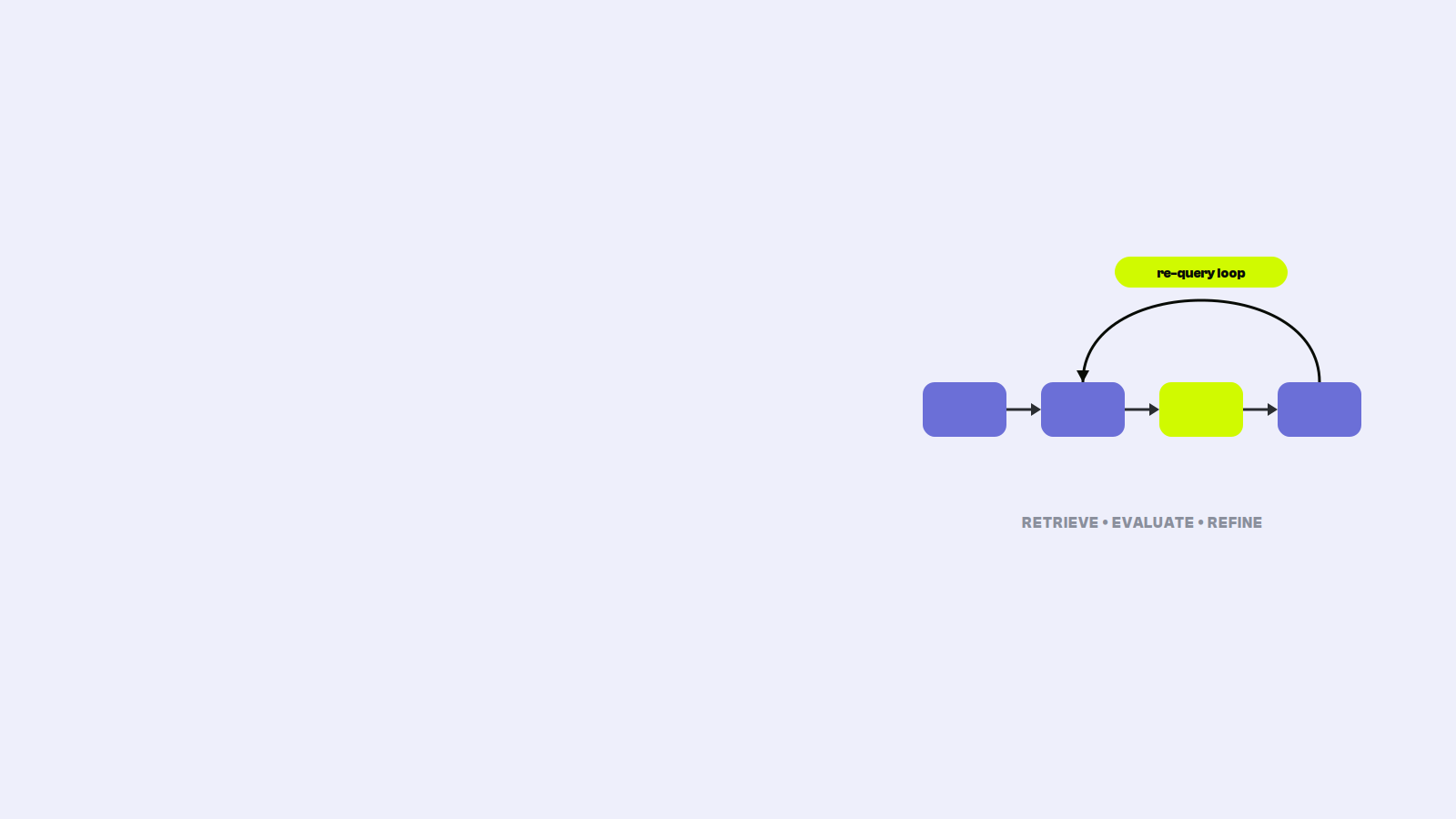
Here's the honest truth about hybrid teams that vendors skip: the technology is the easy part. Agents that write decent code and nearshore engineers who do strong work are both readily available. What's hard — and what actually determines whether a hybrid team delivers on its promise — is the orchestration: the system of handoffs that connects people and agents into one coherent team rather than two disconnected efforts.
Orchestration is the unglamorous machinery of the model. How is a task assessed and routed to the right quadrant? How does an agent's output get to the right human for review, and how does that feedback improve the next round? Where are the checkpoints that catch a bad agent output before it ships? Who owns the workflow itself and improves it over time? Teams that treat this as an afterthought end up with agents producing volume nobody trusts and humans buried in review, which is worse than either resource alone. Teams that treat orchestration as a first-class part of the build — designed, owned, and refined — get the compounding advantage the model promises. The orchestration is the product, in a sense. The people and the agents are just the inputs.
When you should NOT build a hybrid team
An honest guide names the cases where this isn't your move yet. The hybrid model is powerful, but it isn't universal, and forcing it where it doesn't fit is its own mistake.
If your work is almost entirely high-judgment, novel, and hard to specify — a small team doing frontier research or deeply bespoke systems — there may be little routine load for agents to absorb, and the model's core advantage shrinks. If you don't yet have the senior engineering leadership to design and own the orchestration, adding nearshore engineers and agents without that connective tissue just creates coordination chaos; build the leadership first. And if you need a very small amount of work done, the setup cost of the model may outweigh its benefit — sometimes one good hire is simply the right answer. The most valuable advice is occasionally to keep it simple until your scale actually justifies the structure.
Four mistakes that break hybrid teams
Once you see the model through work allocation and orchestration, the expensive mistakes become obvious.
Mistake one: treating agents as senior engineers. Expecting autonomy on judgment-heavy work is how agents produce confident, wrong output on things that matter. They're a force multiplier for the routine, not a replacement for seniority — keep them in their quadrants.
Mistake two: skipping human review to move faster. The quality of a hybrid team comes from humans checking and refining agent output. Remove that and you get volume without reliability — speed that manufactures rework. The review is not the bottleneck; it's the point.
Mistake three: going offshore instead of nearshore to save more. The time-zone overlap is the mechanism, not a perk. Trade it away and you reintroduce exactly the async friction the model was built to eliminate. This is the false economy that quietly kills hybrid teams.
Mistake four: underinvesting in orchestration. The handoffs between people and agents are the hardest and most valuable part of the build. Treat them as an afterthought and you get two disconnected resources instead of one amplified team. Design the workflow as deliberately as you'd design the software.
Every one of these is a failure to respect what actually makes the model work — the right division of labor, held together by real orchestration. Get those right and a small, senior, well-orchestrated team outperforms a much larger and more expensive one.
The Brightter perspective
This model sits exactly at the intersection of what we do, which is why we can build it as one capability rather than two vendors stitched together. We help companies access strong nearshore engineering talent in Latin America, and as an official Anthropic Claude Partner, we build the AI agents and automations that amplify them. That combination is the hybrid model itself — the people and the agents sourced and built by one team that also owns the orchestration between them.
Whether you're standing up a new engineering team, adding AI leverage to an existing one, or trying to work out how the two fit together, we can help you design the work allocation, source the nearshore talent, build the agents, and — most importantly — engineer the orchestration that turns them into one team. But the honest version of our pitch is the framework above. Allocate work by definition and stakes, keep the humans nearshore, invest in the handoffs, and you'll build a strong hybrid team whether you work with us or not.
Conclusion
The old choice between expensive-local and painful-offshore was never really a good one — it was just the only one available. Two shifts changed that: nearshore Latin America put strong engineers in your time zone, and AI agents made routine execution nearly free. The companies that win the next few years won't be the ones that pick one of these. They'll be the ones that combine them into a deliberate structure — senior humans on judgment, agents on the routine, all held together by real orchestration.
The result is a team that produces senior-level output at a fraction of the cost, not by paying people less but by spending their hours only where those hours count. Allocate the work correctly, keep the human half nearshore for the time-zone overlap that makes it all move, and treat the orchestration as the first-class problem it is. The tools are ready and the talent is available. The advantage goes to whoever builds the model first.