.avif)
How to Measure AI Search Visibility: A 2026 Framework for ChatGPT, Claude & Perplexity
Key Takeaways
- AI answer engines have become a front page your analytics can't see. When someone asks ChatGPT or Google's AI “who should I hire for this?”, the answer shapes a buying decision before your site ever gets a visit.
- “Are we in ChatGPT?” is the wrong question. Visibility isn't one number — it's four: are you present, are you accurate, how are you framed, and are you winning the comparison.
- Being cited but wrong is worse than being invisible. A confident AI answer repeating your old pricing or a competitor's claim is a liability that scales.
- The metric that matters most is share of voice — of the buying-intent questions in your category, how often the model names you versus your competitors.
- You can't manage what you don't measure. A real AI-visibility program runs a fixed set of category prompts on a schedule and tracks how the answers move.
- You influence AI answers the same way you earn trust everywhere else: clear content, third-party corroboration, and consistent facts across the web. There's no shortcut, but there is a method.
The metric your analytics can't show you
For twenty years, the first impression of your business happened on a search results page you could measure. You knew your rankings, your clicks, your traffic. The front door was visible, and you could count who walked through it.
That front door is moving. A growing share of buyers now start with a question to an AI — ChatGPT, Claude, Perplexity, Google's AI Overviews — and the model gives them a synthesized answer with a short list of names. If you're on that list, framed well, you've won a recommendation before the buyer has visited a single website. If you're not, you've lost the deal in a conversation you never saw. And here's the unnerving part: none of it shows up in your analytics, because there was no click to your site to measure.
This is the visibility problem of the AI era. The most important impression of your business increasingly happens somewhere you have no dashboard for. This guide is about building that dashboard — turning “how do we look in AI?” from an anxious guess into something you can actually measure and improve.
Why “are we in ChatGPT?” is the wrong question
The instinct, when a company first worries about this, is to open ChatGPT, type its own name, and read what comes back. It feels like a check. It's actually close to useless.
Asking a model about yourself by name tells you what it says when prompted with the answer. But that's not how buyers find you. Buyers don't ask “tell me about Acme Corp” — they've never heard of you yet. They ask “who are the best Webflow agencies for B2B SaaS?” or “how do I migrate off WordPress?” The real question isn't whether the model can describe you when handed your name. It's whether it names you when someone describes their problem.
That shift — from vanity prompts to buying-intent prompts — is the whole foundation of measuring AI visibility properly. You're not auditing what the model knows about you. You're auditing whether you show up in the moments that lead to business, against the competitors showing up in those same moments.
‹ DIAGRAM A — upload “diagram-3b-share-of-voice.png” here (caption: The metric that matters: across 50 buying-intent prompts, how often does the model name you versus your competitors?) ›
The Four Questions: a framework for measuring AI visibility
“AI visibility” sounds like a single thing you either have or don't. It isn't. Every AI answer about your category reveals four distinct things about your standing, and a real measurement program tracks all four separately — because you can be strong on one and failing on another.
1. Presence: do you appear at all?
The baseline question. Across the set of prompts a real buyer would ask, how often does your name come up? This is binary per prompt and a percentage across the set. Zero presence means you're invisible in the conversations that matter — the model doesn't consider you a candidate. Presence is necessary but, on its own, not sufficient, which is why the other three questions exist.
2. Accuracy: is what it says true?
Presence with errors is a trap. When the model mentions you, does it get the facts right — what you do, who you serve, your current positioning and pricing? Models are trained on a snapshot of the web and can confidently repeat information that's years out of date, or blend you with a different company. An answer that names you but describes a service you dropped, or a price you no longer charge, is actively costing you deals. Accuracy is the question most companies never think to measure, and the one that quietly does the most damage.
3. Sentiment: how are you framed?
Being mentioned isn't the same as being recommended. When the model names you, is it as a strong choice, a neutral option in a list, or a hedged “some people also use…”? The framing carries enormous weight, because buyers treat the model's tone as a signal. The goal isn't just to be in the answer — it's to be the answer the model leans toward.
4. Share of voice: are you winning the comparison?
The most decision-relevant metric of all. Buying-intent prompts almost always return several names. Your share of voice is how often you're one of them, weighted by position and framing, relative to your competitors. This is the number that tells you whether you're winning or losing the category in the place buyers now make up their minds — and it's the one to track over time.
The arithmetic of share of voice
Share of voice is abstract until you actually run the numbers, so here's the method, concretely.
Start by writing down the 50 questions a real buyer in your category would ask an AI — not about you, about their problem. “Best agency for X.” “How do I solve Y.” “Who does Z well.” These are your category's buying-intent prompts, and assembling this list honestly is half the work.
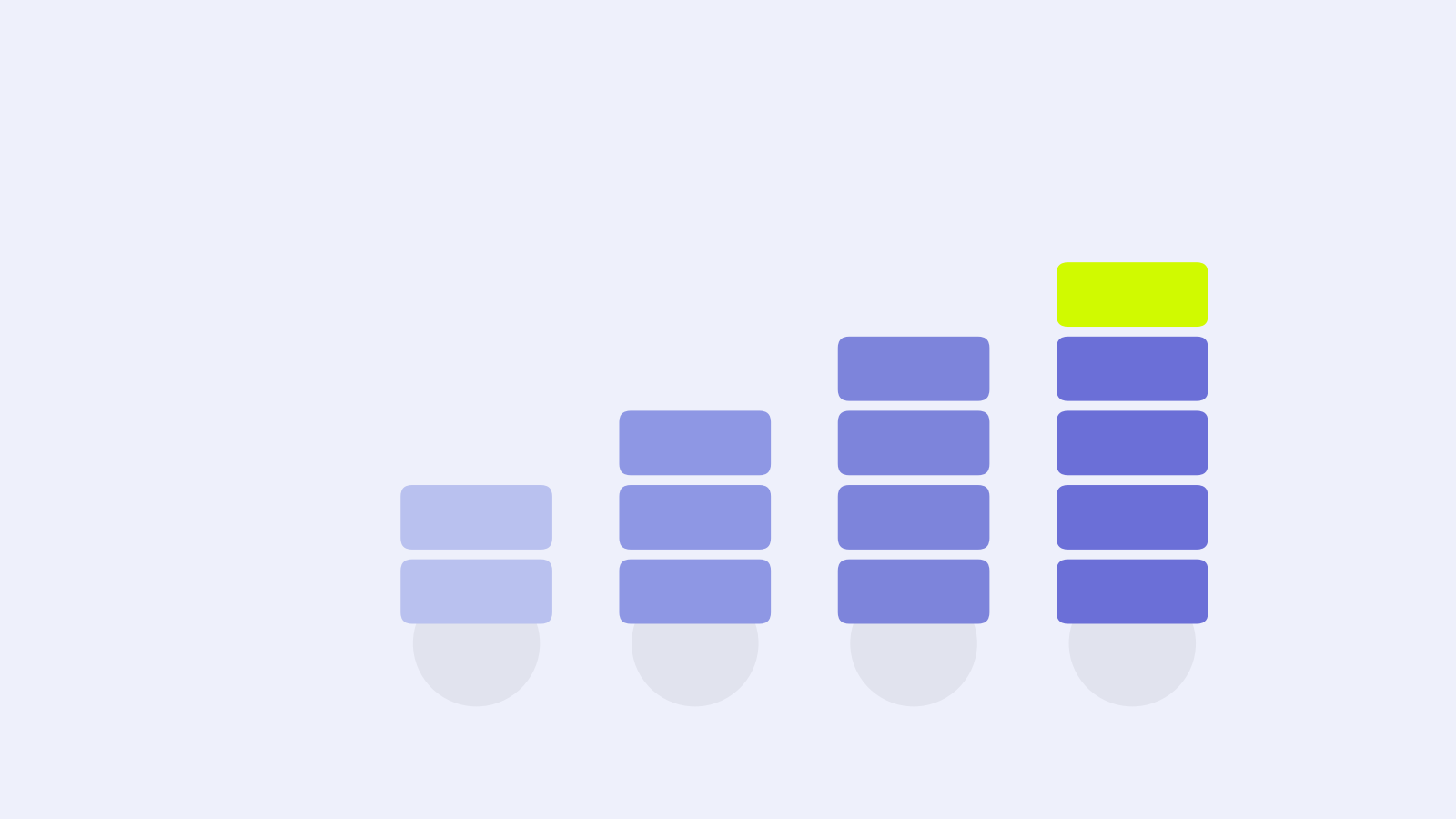
Now run all 50 through each major model and count. Suppose you're named in 7 of the 50 answers — a 14% presence. Your strongest competitor is named in 19. Two others sit at 11 and 8. Add it up and you're fifth of five, holding roughly 14% share of voice in a field where the leader holds nearly 40%. That's not a vibe; that's a scoreboard. And because it's a number, you can watch it move: publish the content that closes the gaps, earn the third-party citations, fix the inaccuracies, and re-run the same 50 prompts a quarter later to see whether your share climbed from 14% toward 34%.
The discipline is in the fixed prompt set. The same 50 questions, run on a schedule, turn a one-time anxiety into a trend line you can manage — exactly like rank tracking did for classic SEO.
Presence isn't the goal: the visibility matrix
Put two of the four questions on axes — how often you're present, and how you're framed when you are — and you get a map that's far more useful than any single score. Every company sits in one of four zones, and the right move is different in each.
‹ DIAGRAM B — upload “diagram-3a-visibility-matrix.png” here (caption: Presence and sentiment together — being cited often but framed badly is a different problem than being invisible.) ›
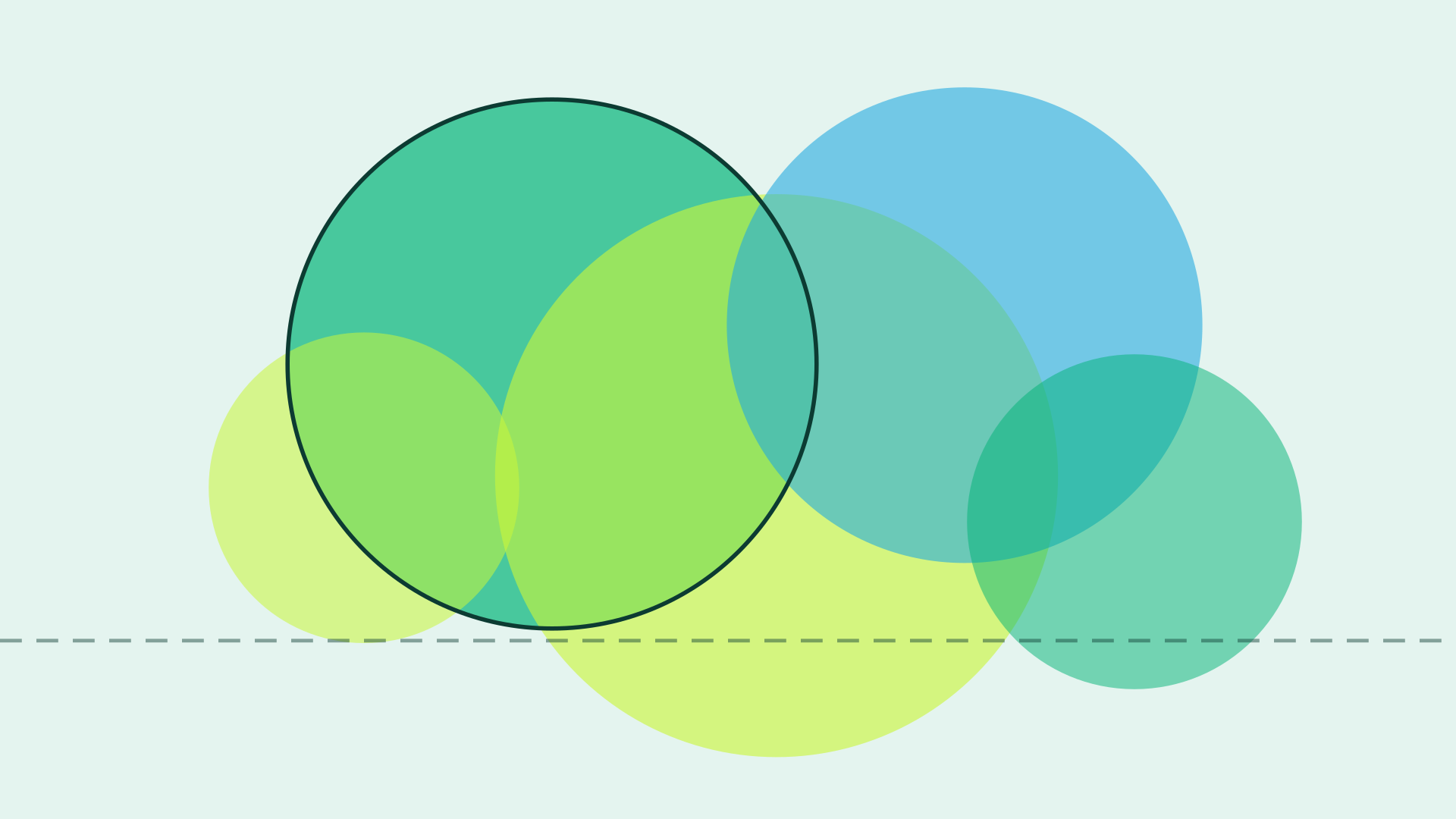
The Invisible zone — low presence, neutral framing — is where most companies start: the model simply doesn't surface you. The fix is foundational content and corroboration so the model learns you exist and what you do. The Misrepresented zone — high presence, poor or wrong framing — is the dangerous one: the model talks about you often, but inaccurately or unfavorably, and every answer works against you. That's a correction problem, not a reach problem. The Niche Authority zone — low presence, strong framing — means that when you do appear, you look great; you just don't appear enough, so the work is expanding reach into more of the category's prompts. And the AI-Preferred zone — high presence, strong framing — is the goal: cited often and recommended warmly.
The reason the matrix matters is that these zones call for opposite actions. A company that's Misrepresented and responds by chasing more presence just amplifies a bad message. Know your zone before you choose your move.
Why the model says what it says
Once you can measure AI visibility, the natural next question is how to change it — and here the honest answer separates real practitioners from people selling magic. You do not influence AI answers by gaming a ranking algorithm. Models synthesize an answer from patterns across their training data and, increasingly, from live retrieval of the web. What they reflect is, roughly, the consensus of what the internet says about your category.
That means the levers are the same ones that build genuine authority, just aimed at a new reader. Clear, structured content that directly answers your category's real questions gives the model something accurate to draw on. Third-party corroboration — being mentioned, reviewed, and cited on sites the model trusts — is what moves you from “a company that describes itself well” to “a company others vouch for,” and models weight the second far more heavily. Consistent facts across the web — the same positioning, the same services, the same details everywhere you appear — reduce the confusion that produces inaccurate answers. And structured, machine-readable content (clean headings, FAQ markup, direct question-and-answer formats) makes you easier to quote correctly.
There's no trick here, and anyone promising to “get you into ChatGPT” with one clever move is selling the SEO snake oil of a new decade. But there is a method, and it compounds: the same work that makes an AI cite you accurately makes you more credible to the humans reading the answer.
When you should NOT chase AI visibility
An honest guide has to name the cases where this isn't your priority. AI visibility matters enormously if your buyers research their decisions — B2B services, considered purchases, anything where someone asks “who's good at this?” before they buy. It matters much less if it doesn't fit how your customers actually decide.
If you sell on relationships and referrals and your pipeline has nothing to do with discovery, pouring effort into share of voice is optimizing a channel that isn't yours. If you're pre-product-market-fit and still figuring out what you sell, you don't yet have a stable message for the model to reflect — fix the message first. And if your classic SEO and content foundations are weak, chasing AI visibility is building the second floor before the first: the same content work underpins both, so start at the bottom. The most useful advice is sometimes to measure your visibility, note where you stand, and then go fix something more fundamental first.
Four measurement mistakes that mislead the most
Once you start measuring AI visibility, four mistakes will quietly give you the wrong picture.
Mistake one: testing vanity prompts. Asking the model about yourself by name measures the wrong thing entirely. Buyers describe problems, not brands. Test buying-intent prompts or you're auditing a conversation that never happens.
Mistake two: checking once. A single snapshot tells you almost nothing, because model answers shift as the web changes and models update. Value comes from the same prompt set run on a schedule, so you see the trend, not a moment.
Mistake three: counting presence and ignoring accuracy and framing. “We got mentioned!” feels like a win even when the mention is wrong or lukewarm. Presence without accuracy and sentiment is a vanity metric that can hide an active liability.
Mistake four: measuring yourself in isolation. Your visibility only means something relative to your competitors' — share of voice is comparative by nature. Track only your own mentions and you'll miss that you're gaining while losing ground.
Every one of these produces a number that feels reassuring and means little. Measure the right prompts, over time, on all four questions, against your competitors, and the picture becomes honest — and actionable.
The Brightter perspective
Measuring AI visibility properly is exactly the kind of work we do, and the reason we lead with measurement rather than promises is everything above. We build a fixed set of your category's real buying-intent prompts, run them across the major models, and score you on all four questions — presence, accuracy, sentiment, and share of voice — so “how do we look in AI?” becomes a scoreboard you can watch instead of a worry you can't.
As an official Anthropic Claude Partner and a Webflow Certified Partner, we then do the work that moves the number: the structured content, the machine-readable formatting, the corroboration strategy, and the site architecture that make models cite you accurately and favorably. But the honest version of our pitch is the framework itself. Build your prompt set, run it on a schedule, track all four questions against your competitors, and you'll understand your AI visibility whether you work with us or not.
Conclusion
The reason AI visibility feels so slippery is that companies keep trying to reduce it to a single yes-or-no — “are we in ChatGPT?” — when it's really four questions with four different answers. Are you present in the conversations that lead to business? Is what the model says accurate? Are you framed as a strong choice? And are you winning the comparison against the competitors in your category?
The front door of first impressions has moved into a place your analytics can't see, but it isn't unmeasurable — it just needs a new instrument. Build the prompt set, run it on a schedule, score all four questions, and watch your share of voice against the field. What used to be an anxious guess becomes a trend line you can manage, in the place your buyers now make up their minds.