.avif)
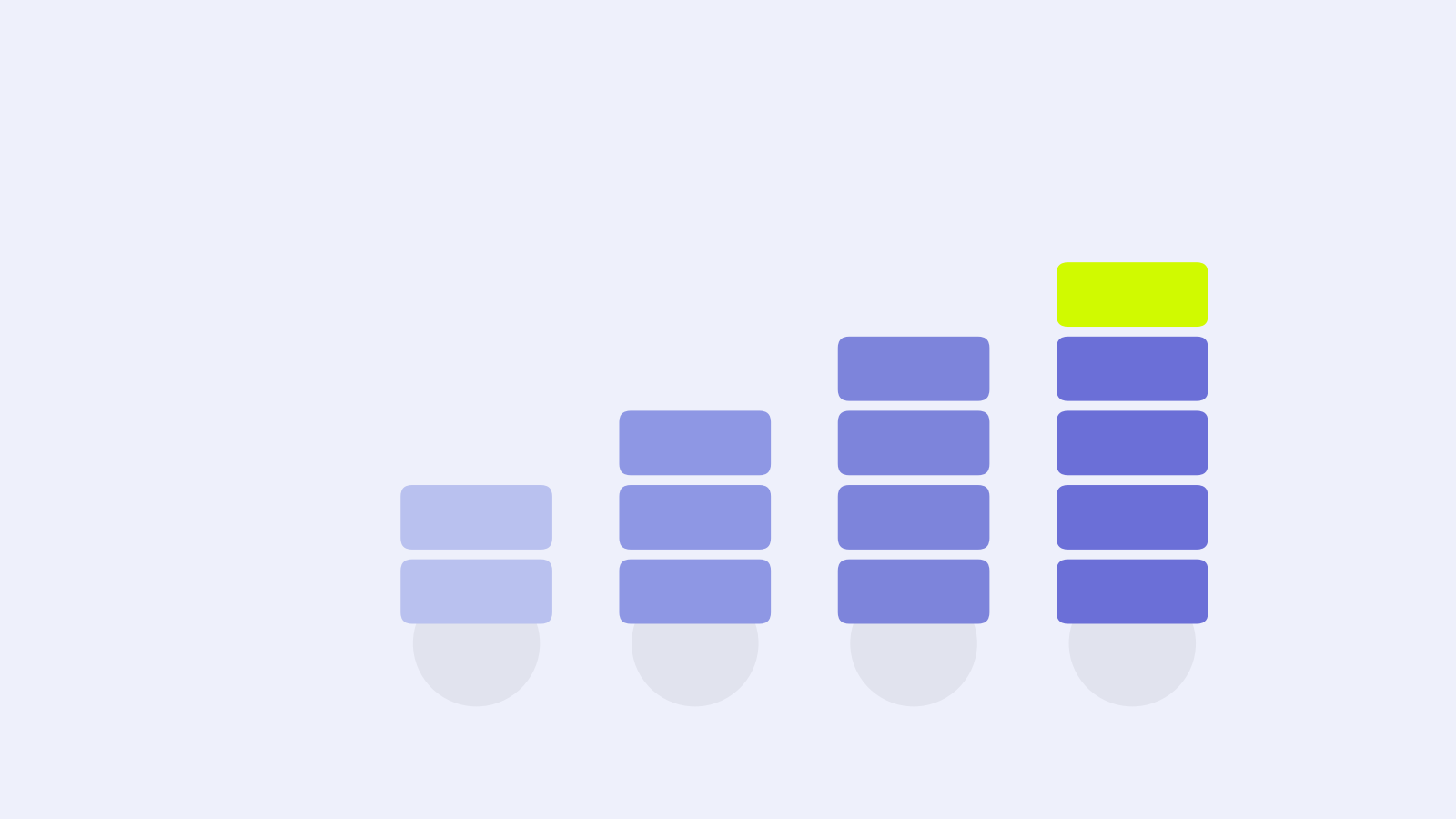
What a Webflow Website Actually Costs in 2026: A Transparent Cost Breakdown
Key Takeaways
- Page count is the least useful number in a website quote. Two 8-page sites can be priced 5× apart, and the gap is never about the pages.
- The price of a Webflow site is set by five multipliers: design originality, CMS depth, integrations, content readiness, and craft standard. Learn to see them and any quote becomes legible.
- Where your project sits on two axes — scope complexity and craft standard — predicts its price zone better than any feature list.
- The cheapest quote is usually a forecast of the rework you'll pay for later. The lowest number and the lowest total cost are rarely the same thing.
- Hosting and platform fees are a rounding error (roughly $18–$49/month). If a quote is dominated by them, someone is hiding the real cost.
- The most valuable thing you can demand isn't a lower number — it's a fixed scope. Without one, you're comparing quotes that don't mean the same thing.
The question that's almost always priced wrong
“How much does a Webflow website cost?” is the most common question we get, and the honest answer annoys people: it depends. But that's not evasion — it's the single most important thing to understand about buying a website, and most buyers get it exactly backwards.
They ask about page count. They compare quotes as if a bigger number means someone is overcharging. They treat the website like a commodity with a per-unit price, the way you'd buy printing or bulk email.
A website isn't a commodity. It's a piece of custom manufacturing, and the price is set by decisions most buyers never think to ask about. This guide gives you the framework professionals use internally to price and scope a build — so you can read any quote, spot the false economies, and spend where it actually matters.
Why the same site is priced 5× apart
Start with the fact that breaks the commodity mindset. Take two companies that both ask for “a new 8-page Webflow site.” Same page count, same platform, same brief on paper. One project costs $12,000. The other costs $50,000. Neither price is wrong.
What separates them isn't the eight pages. It's everything underneath the pages — and that’s the part a page count can't see. The first company has its brand and copy ready, wants a clean and credible design, and needs two integrations. The second wants original illustration, custom motion design, a gated resource center, a customer-story CMS, a careers portal wired to its applicant-tracking system, and two languages. Same eight pages. A completely different manufacturing job.
Once you internalize this, the whole pricing conversation changes. You stop asking “why is this quote higher?” and start asking “which multipliers apply to my project?”
‹ DIAGRAM A — upload “diagram-1b-cost-waterfall.png” here (caption: The same 8-page brief, layer by layer — each addition is a cost multiplier, not a line item.) ›
The Five Multipliers: a model for reading any website quote
Every website quote, however it's dressed up, is a base build multiplied by five factors. Learn to see them and you can decode any number you're given — and predict what a project should cost before anyone quotes you.
1. Design originality
This is the biggest single multiplier, and the one buyers underestimate most. Adapting a proven, well-structured layout to your brand is efficient. Designing an original visual system — bespoke layouts, custom illustration, a distinctive type and motion language — is a different order of work. Every original element has to be conceived, designed, built, and tested across every screen size. Motion is the quiet budget-killer here: each animation is small to imagine and substantial to execute well.
2. CMS depth
A static site is a set of fixed pages. A CMS-driven site is a small piece of software: collections, templates, relationships, and an editing experience your team can use without a developer. The moment you want a blog, a resource library, case studies that filter, job listings, or a team directory that non-technical staff maintain, you've moved from building pages to building a system. That system is where a lot of the durable value lives — and a real share of the cost.
3. Integration count
Every connection to another tool — your CRM, marketing automation, a booking system, payments, search, memberships, a translation layer — is a small project inside the project. Build it, connect it, test it, and handle the edge cases where it breaks. Three integrations is a manageable afternoon of scope. Ten is a meaningful fraction of the whole build. Buyers routinely list integrations as afterthoughts and are surprised when they move the number.
4. Content readiness
This is the multiplier nobody wants to hear about. If your copy, images, and video are written, shot, and ready, the project moves fast and cheap. If they aren't — and most of the time they aren't — someone has to create them, and that someone is either your team (a hidden cost in time) or the agency (a visible cost in the quote). Content is the number-one reason projects stall, and unready content is why two identical briefs can diverge by tens of thousands of dollars.
5. Craft and strategy standard
The least visible multiplier and often the most valuable. This is the gap between “it works” and “it converts”: information architecture, messaging, conversion design, SEO and AEO structure, accessibility, and performance engineering. It doesn't show up as a feature you can point at, which is exactly why it's the first thing a cheap quote cuts. It's also the difference between a site that merely exists and one that earns its cost back.
The arithmetic of a real quote
Multipliers are abstract until you put numbers on them, so let's price a real project the way we would internally.
Begin with a base build — eight well-structured pages sharing a small set of templates, with your brand and copy provided. Call it $8,000. That's a clean, credible site, efficiently made.
Now apply the multipliers this particular client actually wants. They need a custom design rather than an adapted layout: +$6,000. They want a real CMS with a resource hub and filterable case studies: +$7,000. They need four integrations — CRM, newsletter, a booking tool, and their ATS: +$9,000. And they want the craft layer — conversion-focused strategy, SEO and AEO structure, and homepage motion: +$8,000.
Same eight pages. Final price: $38,000. Not because anyone padded the number, but because four multipliers applied. Strip them away and the same brief is $8,000. That spread — $8k to $38k for “the same site” — is the entire reason page count is useless as a pricing input.
Where your project actually sits: the complexity–craft matrix
The five multipliers collapse neatly onto two axes. On one, how complex is the scope — how much system, how many integrations, how much original design. On the other, how high is the craft and strategy standard — functional, or premium. Plot your project honestly on both and it lands in one of four zones, each with a characteristic price band.
‹ DIAGRAM B — upload “diagram-1a-cost-matrix.png” here (caption: Two axes predict price better than any feature list — where does your project honestly sit?) ›
The Template zone ($1.5k–$8k) is a proven layout, lightly customized — the right call for an early, simple site that needs to exist more than it needs to impress. The Standard zone ($8k–$20k) is where most serious growth-stage sites live: custom design, a real CMS, conversion thinking, a few integrations. The Specialist zone ($20k–$50k) is high craft on a focused scope — you're paying for design and strategy excellence, not sprawl. And the Flagship zone ($50k+) is high complexity and high craft: a design system, deep CMS architecture, many integrations, performance and accessibility engineering.
The useful discipline here is honesty about which axis you're actually buying on. Plenty of buyers want Flagship craft on a Template scope and are confused by the quote. The matrix tells you what you're really asking for.
The false economy: why the cheapest quote is the most expensive
Here is the most expensive mistake in website buying, and it's counterintuitive: the lowest quote is frequently the highest total cost.
A low bid isn't magic. It's a set of omissions. The strategy layer is gone. The content is your problem. The CMS is thin or absent. Accessibility and performance are “out of scope.” The quote is low because the work is missing — and the work doesn't disappear, it just gets deferred to you, or discovered later at a premium.
Then the real cost arrives. The site underperforms because no one thought about conversion. It's slow because performance wasn't engineered. It can't be updated without a developer because the CMS was skipped. Within a year you're paying someone to rebuild what you already bought. The cheapest quote turned out to be a down payment on a second project. When you compare a $6,000 quote against a $22,000 quote, you are almost never comparing the same site at two prices. You're comparing two different projects, one of which quietly leaves the hard parts undone.
What you're actually paying for (and it isn't pages)
If page count is the wrong lens, what's the right one? You're paying for judgment. The pages are the visible artifact; the value is in the thousand decisions behind them — how the site is structured, what each page is trying to make a visitor do, how it's built to be found by search and answer engines, how fast it loads, how it holds up as you grow.
This reframes the whole comparison. Stop pricing the deliverable and start pricing the outcome. A site that converts a meaningfully higher share of its visitors, or that ranks and gets cited by AI answer engines, pays for itself many times over — and it costs more to make because that outcome is engineered, not accidental. Price to the outcome you need, not to the number of pages you can count.
When you should NOT spend the money
An honest guide has to include the other side. Not every project deserves a big budget, and a good partner will tell you so.
If you're pre-product-market-fit and you mostly need to exist online while you figure out what you're selling, a Template-zone site is the correct answer, not a compromise. Spending Flagship money before you know your message is buying precision you can't yet use — you'll want to change everything in six months anyway. Likewise, if your business genuinely doesn't run on its website — if leads come from relationships or referrals and the site is a formality — don't over-invest in a channel that isn't doing the work. The most valuable pricing advice is sometimes to spend less. The cheapest website project is the one you correctly scope down.
How to read a quote so you're comparing the same thing
Most buyers compare quotes by staring at the totals. That's like comparing two cars by weight. Instead, interrogate each quote against the multipliers — the answers are what make the numbers comparable.
Ask what exactly is included, page by page, as a deliverables list rather than a total. Ask whether the design is custom or template-based, because that one answer explains most of the gap between two numbers. Ask who is responsible for content. Ask which parts of the finished site your team can edit without a developer. Ask what happens after launch — revisions, support, the cost of future changes. And ask whether SEO, accessibility, and performance are in scope, because those are the first things a low bid silently drops.
A quote that answers all of these clearly is worth more than a lower one that doesn't — because you finally know what you're buying. A number without a scope is not a price. It's a placeholder for an argument you'll have later.
Four pricing mistakes that cost buyers the most
Once you see projects through the multipliers, the common buying mistakes become obvious — and expensive. These four account for most of the money wasted on websites.
Mistake one: pricing on page count. We’ve said it throughout, but it’s worth naming as an error, because it drives all the others. Buyers who anchor on “how much per page” systematically underpay for the projects that need craft and overpay for the ones that don’t. Page count is the input that feels precise and means nothing.
Mistake two: treating content as free. The single most common budget blowout isn’t design or development — it’s the discovery, three weeks in, that nobody owns the copy. Content is real work with a real cost, and pretending it’s a rounding error is why projects stall and quotes get revised upward mid-flight. Decide up front who’s writing the words, and price it.
Mistake three: buying the deliverable instead of the outcome. A website is not the goal; leads, credibility, and conversions are. Buyers who optimize for the lowest cost per page end up with a cheap artifact that doesn’t move the business. Buyers who ask “what will this site need to do, and what’s that worth?” spend more and get more back. The most expensive site is the one that’s cheap and doesn’t work.
Mistake four: skipping the scope conversation to move fast. It feels efficient to grab a quick number and start. It isn’t. An unfixed scope guarantees mid-project surprises, scope creep, and a strained relationship when the estimate meets reality. The hour you save skipping discovery is repaid with interest in change orders. Fixing scope first is the cheapest insurance in the entire process.
Notice that none of these are about being charged too much. Every one is about measuring the wrong thing. Get the measurement right and the price takes care of itself.
The quote has a shelf life
One last piece of nuance that trips up buyers: a website quote is a snapshot of a project at a moment, and projects drift. The scope you describe in the first call is rarely the scope you approve, because the act of planning surfaces needs you hadn't considered. That's normal — but it means a quote given before the scope is fixed is an estimate, not a price, and treating it as a guarantee sets up a fight.
The professional way to handle this is to invest a little up front in fixing the scope — a short discovery or scoping phase — before locking a number. It feels like a delay. It's actually the cheapest insurance you can buy, because it converts a guess into a commitment and removes the mid-project surprises that blow up both budgets and relationships.
The Brightter perspective
We don't publish a fixed price list, and now you know why: a fixed price for “a website” would be a fiction, priced either too high for the simple projects or too low for the ambitious ones. Instead we scope each project against exactly these multipliers and give you an itemized estimate for cost and timeline before any work begins — so you can see which layers you're paying for and decide, with us, where the money should go.
As a Webflow Certified Partner and an official Anthropic Claude Partner, we tend to build in the zones where craft and strategy matter — and increasingly where the site does real work, pairing a clean Webflow build with AI assistants and automations. But the honest version of our pitch is the framework above: understand the multipliers, price to the outcome, demand a fixed scope, and you'll spend well whether you hire us or not.
Conclusion
The reason “how much does a Webflow website cost?” has no single answer is that it's the wrong question. The right question is: which multipliers does my project need, and what outcome am I buying? Answer those and the price stops being a mystery and becomes a decision you control.
Page count will tell you nothing. The five multipliers and the two axes will tell you almost everything. Use them to read any quote, avoid the false economy of the cheapest bid, insist on a fixed scope, and put your budget where it earns its return. The goal was never the cheapest site. It's the site that pays you back.